Flexible IVR for structured and conversational calls

Combine Reliable Call Menus with AI-Powered Understanding

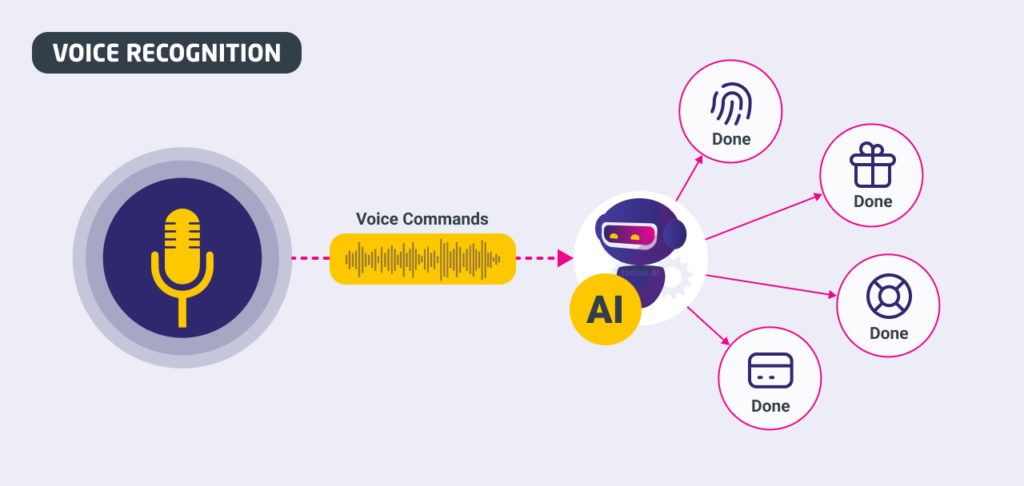
Use prompts and keypad menus where predictability matters, speech and intent routing where callers need flexibility, and human transfer when the workflow should not continue automatically.

DTMF and speech Intent-based routing Business-tool actions Human fallback
NextGenSwitch AI IVR interaction flow
Rules + speech + AI + agents
CallerSpeaks or selects
InputDTMF or speech service
DecisionRules, intent, or AI
OutcomeAction, route, or transfer

Hybrid call design

Use the Right Control for Each Step

A strong IVR does not need AI everywhere. Combine predictable menus, flexible language understanding, validation, and escalation.

01

Deterministic Menu

Use DTMF, fixed choices, time conditions, and explicit routes for predictable and sensitive steps.

02

Speech Input

Use the configured speech-recognition provider to collect supported spoken input.

03

Intent or AI Handling

Classify requests or hold a flexible conversation when the use case and risk permit it.

04

Human Transfer

Route uncertainty, exceptions, complaints, sensitive requests, or customer preference to a person.

AI IVR speech and routing workflow

Call-flow capabilities

Move from Caller Request to a Defined Outcome

Prompts and ResponsesPlay audio or generate speech through the configured provider.
Routing and FallbackChoose destinations using menus, intent, data, time, availability, and error rules.
Business ActionsUse approved APIs to retrieve, validate, create, update, or schedule information.
Language WorkflowsSelect STT, TTS, AI, and translation services for the required languages.
Events and OutcomesRecord available inputs, routes, actions, failures, transfers, and call results.

Workflow patterns

Apply AI IVR to Defined Service Journeys

Support Triage

Identify the issue, gather basic details, offer approved guidance, create a ticket, or route to support.

Appointments

Collect purpose and preferences, search availability, confirm details, and escalate exceptions.

Order and Delivery

Validate permitted information, check order status, confirm delivery, and route complex changes.

Lead Intake

Ask qualification questions, record requirements, schedule follow-up, or transfer an eligible prospect.

Department Routing

Let callers describe their need and route to a queue, extension, branch, language, or service group.

Information Services

Deliver approved information from knowledge or business systems with clear fallback and escalation.

Operational safeguards

Plan for Noise, Uncertainty, and Provider Failure

Speech and AI services are probabilistic. Production flows need confirmation, retry limits, alternative input, timeout, fallback, and human routes.

Retry Limits

Limit misunderstandings and avoid trapping callers in repeating loops.

Alternative Input

Offer DTMF or another path when speech input is unsuitable.

Confirmation

Repeat important information before creating or changing a record.

Escalation

Transfer when confidence, policy, risk, or caller preference requires a person.

Implementation planning

Define the Call Journey and Service Stack

01

Caller and Intent

Who calls, why they call, languages, authentication, data, common requests, and exceptions.

02

Conversation Design

Prompts, menus, speech, AI instructions, confirmations, tools, retries, timeouts, and fallback.

03

Providers and Systems

SIP, STT, TTS, LLM, translation, CRM, scheduling, order, support, and custom APIs.

04

Operations

Queues, agents, hours, recordings, monitoring, logs, privacy, retention, support, and ownership.

Recognition quality, languages, latency, cost, and conversational behavior depend on audio conditions, telecom routes, selected providers, prompts, data, and workflow design.

Design the call flow

Map Your Menu, Speech, AI, Tools, and Human Routes

Share your callers, intents, languages, systems, actions, queues, providers, and fallback requirements.

Discuss Your AI IVR Compare AI Voice Agents