For service providers and multi-company operations

Operate Multiple Contact Center and PBX Tenants from One Platform

Create separate communication environments for customers, brands, departments, or campaigns while managing platform operations through a centralized administrative layer.

Tenant separation Central administration PBX and contact center Optional white-label scope
NextGenSwitch multi-tenant contact center and cloud PBX
Multiple isolated operations
Central platform Provider Administration
Tenant AUsers, routing, queues Tenant BUsers, routing, queues Tenant CUsers, routing, queues

Operating model

Separate Tenant Workflows, Centralize Platform Management

Configure customer or departmental environments without deploying an unrelated PBX stack for every operation.

Tenant Provisioning

Create and manage tenant environments with their assigned users, extensions, and operational configuration.

Independent Call Flows

Configure inbound routes, outbound rules, IVR, queues, and extensions according to each tenant’s needs.

Role-Based Operations

Assign administrative and operational access according to the roles supported by the deployment.

Central Administration

Manage platform-level configuration and tenant lifecycle from a common administrative environment.

Product evidence

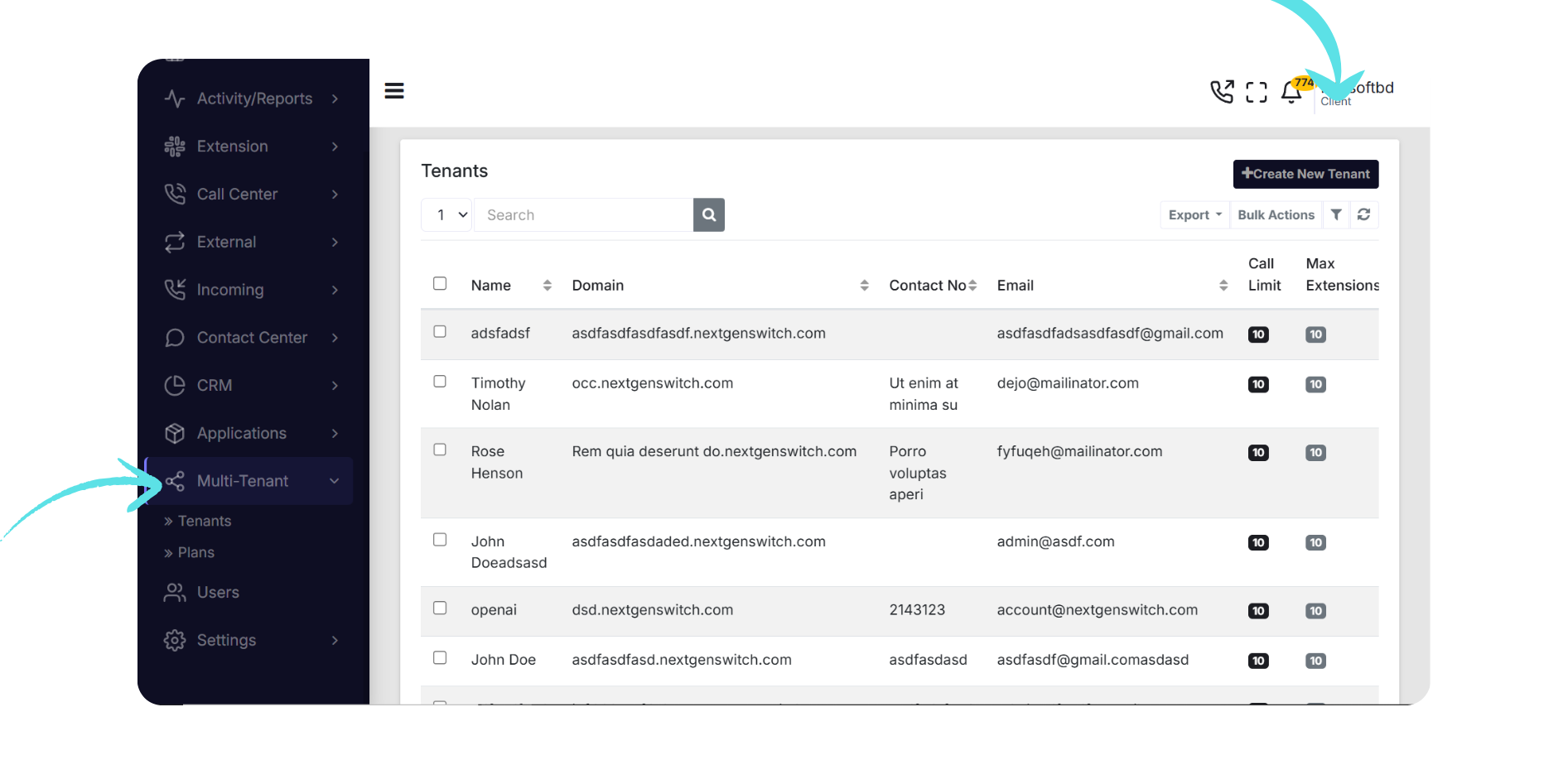
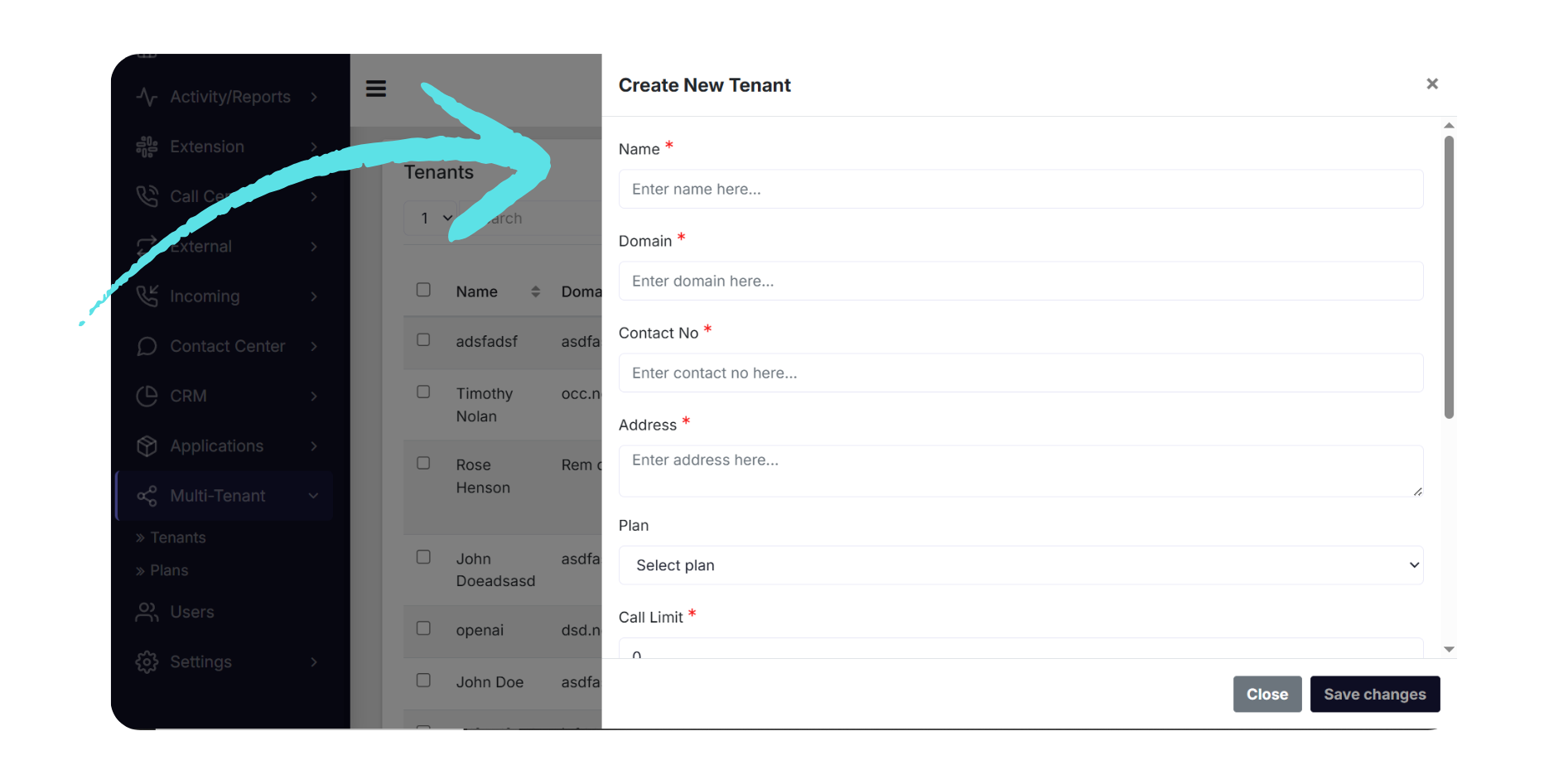
See Tenant Administration in the Platform

Review the existing tenant management and creation interfaces.

Manage tenant view in NextGenSwitch
Manage tenantsReview and operate provisioned tenant environments.
Create tenant workflow in NextGenSwitch
Create a tenantProvision a new environment with assigned tenant information.

Core platform scope

Build the Service Around Voice Operations

Use the required PBX, contact center, routing, campaign, reporting, and API modules according to the agreed deployment.

Tenant PBX Operations

Extensions, SIP connectivity, inbound and outbound routing, IVR, call flows, logs, and recordings according to configuration.

Contact Center Operations

Queues, agents, campaigns, supervisors, outcomes, and reporting according to the modules included in the scope.

Campaigns and Automation

Support broadcasts, reminders, surveys, or automated calling workflows with the required telephony and provider setup.

APIs and Integrations

Connect platform events and voice workflows to CRM, billing, support, AI, or custom systems when included.

Define the commercial scope

Core Deployment, Optional Modules, and External Costs

Core deployment

Platform Foundation

  • Multi-tenant platform deployment
  • Tenant and extension management
  • SIP trunk configuration
  • Inbound and outbound call flows
  • IVR and queue configuration
  • Logs and basic reporting
  • Administrative training and agreed support
Optional scope

Extensions and Integrations

  • AI voice agents and AI IVR
  • CRM or helpdesk integration
  • Billing integration or custom billing work
  • White-label branding
  • Messaging automation
  • Custom workflows and reports
  • Migration or specialized development
External costs

Customer or Provider Services

  • Server or cloud infrastructure
  • SIP trunks and phone numbers
  • Telecom minutes and carrier charges
  • AI, STT, TTS, and LLM usage
  • WhatsApp, SMS, and channel fees
  • Third-party licenses and subscriptions
  • Services not listed in the proposal

The final quotation and service agreement define exact inclusions, limits, responsibilities, and support terms.

Who it fits

Designed for Organizations Delivering Communication at Scale

Telecom & VoIP Providers

Offer hosted PBX or contact center services across multiple customer environments.

BPO Operators

Separate customer campaigns, teams, queues, trunks, and operating workflows.

MSPs & IT Providers

Deliver managed communication services as part of a broader technology offering.

Multi-Company Enterprises

Operate separate branches, brands, business units, or departments on a shared platform.

Implementation planning

Define the Service Before Deploying the Platform

A multi-tenant rollout requires decisions about capacity, ownership, branding, billing, support, security, and provider responsibilities.

01

Commercial Model

Customers, packages, licensing, billing approach, support boundaries, and white-label requirements.

02

Capacity Model

Tenants, extensions, agents, concurrent calls, queues, campaigns, storage, and growth expectations.

03

Provider Model

Infrastructure, SIP trunks, phone numbers, carriers, AI providers, messaging channels, and regions.

04

Operating Model

Provisioning, tenant support, monitoring, upgrades, backups, access roles, and escalation responsibilities.

Technical evaluation

Review the Product and Deployment Resources

Use the demo and documentation to validate platform fit before finalizing a provider scope.

Plan your provider platform

Define Your Multi-Tenant Service and Deployment Scope

Share your tenant model, expected capacity, telephony providers, branding needs, integrations, and support responsibilities.

Request a Provider Consultation Review Plans