Programmable telephony for developers

Connect Your Application to Real Voice Workflows

Initiate and receive calls, return XML call instructions, play or generate prompts, gather input, route calls, receive events, and stream audio to external services.

REST and webhooks XML call control SIP connectivity WebSocket streaming
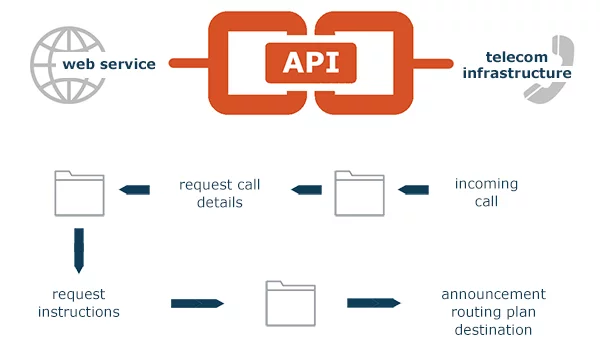
NextGenSwitch programmable voice API architecture
Application-controlled calling
Your applicationRequests or receives a call
NextGenSwitchExecutes voice instructions
TelephonyUses configured SIP routes
CallerHears and interacts

Official SDKs

Move from API reference to a working call faster

Use maintained helpers for authentication, call control, escaped Voice XML, errors, recordings, streaming, and documented callbacks.

Developer controls

Compose Calls with APIs, Events, and Voice Verbs

<SAY>

Generate Speech

Send text to the configured text-to-speech service and play it into the call.

<PLAY>

Play Audio

Play an approved audio resource as part of a call flow.

<GATHER>

Collect Input

Collect supported keypad or speech input and return it to the application.

<STREAM>

Stream Audio

Open supported bidirectional WebSocket audio for AI or specialized real-time processing.

Initiate Calls

Start outbound calls through the API using configured numbers, carriers, and destinations.

Receive Events

Handle call status and workflow callbacks using application endpoints.

Application patterns

Build the Voice Experience Your Workflow Requires

AI Voice Agents

Stream audio to an AI stack, execute tool actions, and transfer calls to human operations.

Explore AI agents

Notifications and Reminders

Trigger calls from application events and capture confirmation or response.

Explore automated calling

Verification Workflows

Deliver supported codes or collect input according to the authentication and security design.

Dynamic IVR

Use live application data to decide prompts, menus, routes, and destinations.

Booking and Scheduling

Connect voice interactions to calendars, appointment services, and confirmation workflows.

Order and Service Actions

Connect calls to product, order, delivery, ticket, or custom business APIs.

Real-time AI integration

Keep Telephony and AI Services Modular

Use NextGenSwitch for SIP and call control while connecting the speech, language model, tools, and agent framework selected for the application.

Review Streaming Docs
Telephony NextGenSwitch Real-time audio WebSocket Stream AI application STT · LLM · TTS · Tools

Production responsibilities

Design for Failure, Security, and Telecom Reality

01

Authentication

Protect API credentials, validate requests and callbacks, rotate secrets, and restrict access.

02

Idempotency and Retries

Handle repeated events, network failures, timeouts, partial completion, and safe retry behavior.

03

Telephony

Plan numbers, carriers, SIP routes, caller ID, codecs, destinations, concurrency, and regulatory obligations.

04

Observability

Log request IDs, call IDs, events, latency, errors, transfers, provider failures, and application outcomes.

Available endpoints, verbs, events, media formats, limits, and provider compatibility should be confirmed against the current documentation and deployment configuration.

Design the integration

Map Your Call, Application, and Provider Architecture

Share your inbound/outbound flows, SIP setup, API actions, events, AI stack, concurrency, and failure requirements.

Start with Documentation Discuss Technical Scope